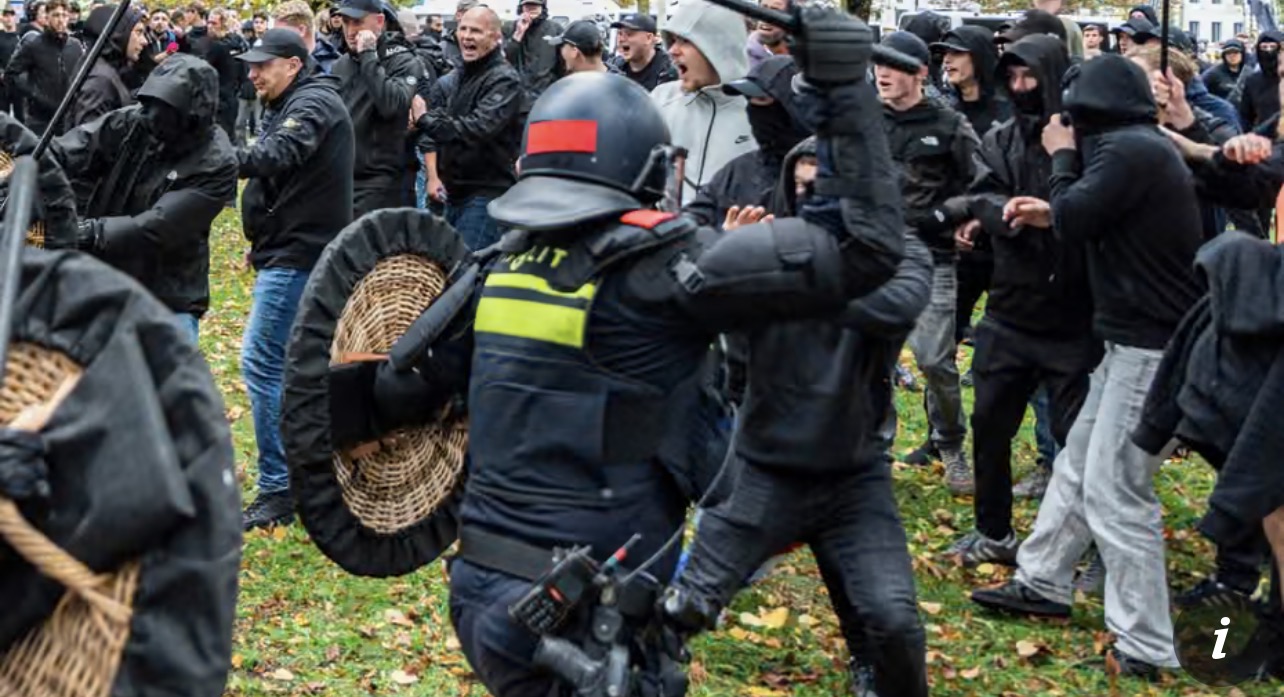
THE HAGUE — Dutch riot police dispersed several hundred protesters in The Hague on Saturday after a demonstration against immigration and asylum policies turned violent, prompting authorities to ban the planned march and order the crowd to leave the area.
The protest was organised by the far-right group We Are the People and began at Malieveld, a central park in The Hague. Tensions escalated when some demonstrators threw fireworks and other projectiles at police officers.Dutch public broadcaster NOS reported that 24 people were arrested during the unrest. Police said the arrests involved several alleged offences, including failure to comply with police orders and possession of weapons.
Authorities used pepper spray and a water cannon to disperse protesters after the situation deteriorated.
Justice Minister David van Weel condemned the violence, describing the scenes as unacceptable and calling for a firm response. In a statement on X, he also accused some demonstrators of making Nazi salutes, using antisemitic slogans and attacking police officers.
Far-Right Protesters

The Hague municipality subsequently prohibited the planned march and instructed the remaining crowd to disperse.
The unrest comes roughly a year after another rightwing demonstration in The Hague descended into clashes between protesters and police. During that incident, a police vehicle was set on fire and the headquarters of the centrist D66 party was attacked.
Prime Minister Rob Jetten, whose party headquarters was targeted during last year’s unrest, condemned Saturday’s confrontation and said protesters had deliberately sought a confrontation with police. He also criticised what he described as far-right and antisemitic chants.
The latest incident has renewed concerns over political violence and public disorder surrounding demonstrations on immigration and asylum policy in the Netherlands.
The Asia Tribune will continue to monitor developments as Dutch authorities investigate the arrests and violence.
Subscribe to our weekly newsletter
Get the week's top stories from Asia delivered to your inbox — free, once a week.