When Lahore’s Skies Breathe Again: Basant Returns After Two Decades Subheadline for cm
By Anique Butt2 min read
By Muhammad Anique Butt
LAHORE,Pakistan:Lahore’s decision to revive Basant after nearly two decades places Pakistan within a growing global trend where governments are reassessing long-restricted cultural practices in favor of regulated celebration and cultural revival. From Spain’s La Tomatina to India’s Holi and Japan’s Hanami, cities worldwide have increasingly turned to heritage festivals as instruments of social cohesion, tourism, and urban identity.
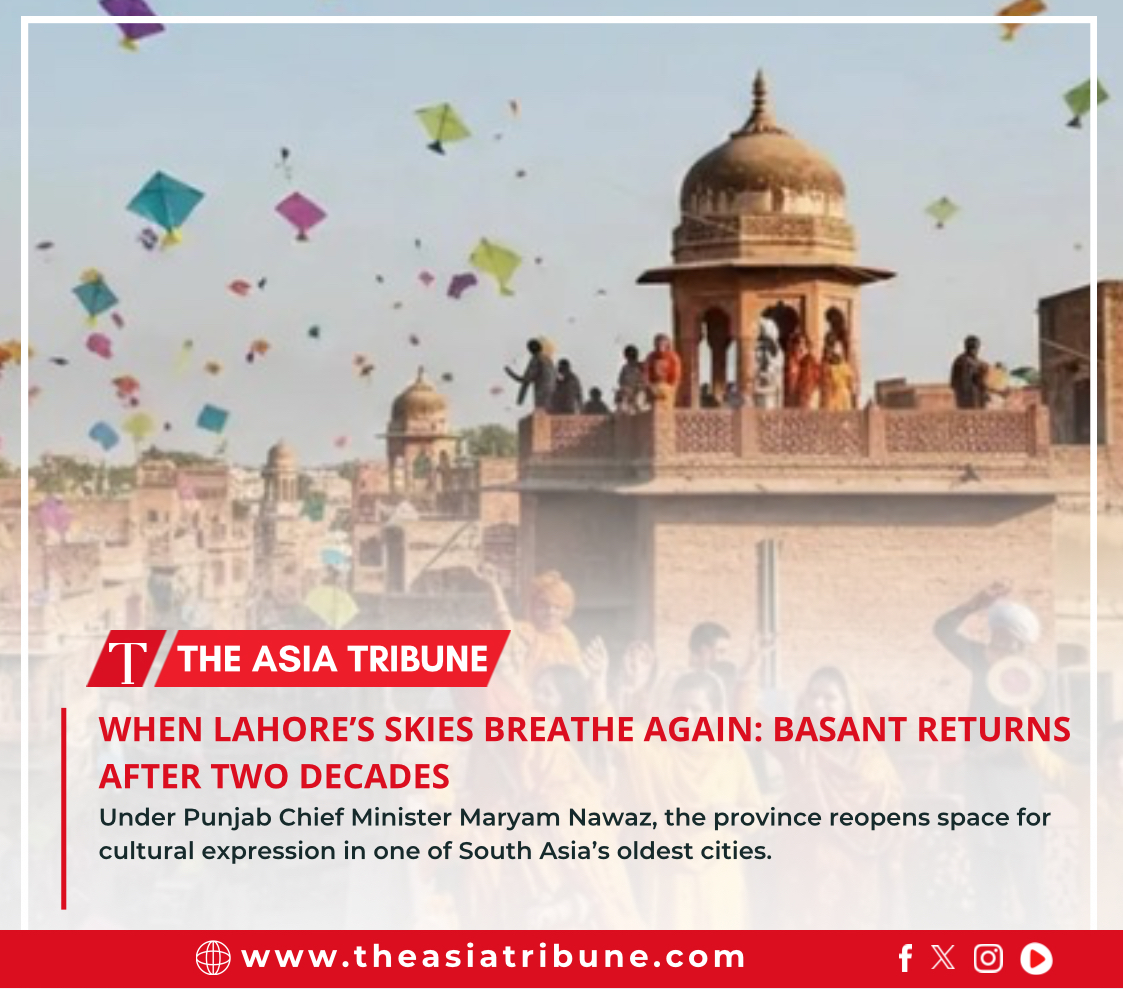
Approved by Punjab Chief Minister Maryam Nawaz, the three-day Basant celebration from February 6 to 8 marks not only the return of a historic spring festival but also a policy shift—one that balances public safety concerns with the preservation of intangible cultural heritage in one of South Asia’s oldest cultural capitals.
Basant, once synonymous with Lahore’s skyline filled with colorful kites, music, and seasonal festivities, was suspended in the mid-2000s following safety concerns related to hazardous kite-flying practices. The prolonged absence of the festival left a cultural void in a city widely regarded as Pakistan’s artistic and intellectual heart.
The Punjab government’s decision to reintroduce Basant under a regulated framework reflects a broader rethinking of cultural governance. Officials say the revival is being carried out with safety protocols, controlled venues, and administrative oversight aimed at preventing past excesses while allowing public participation.
Cultural analysts view the move as part of a wider effort to reposition Lahore as a regional cultural hub at a time when South Asian cities are increasingly leveraging heritage to attract tourism, investment, and global attention. Similar approaches have been adopted worldwide, where authorities now emphasize regulation and civic responsibility over outright prohibition.
Beyond its economic and touristic implications, the return of Basant carries symbolic weight. In a post-pandemic world marked by social fragmentation and urban stress, collective celebrations are increasingly recognized as tools for emotional recovery and community resilience.
For Pakistan, Basant’s revival also feeds into a broader soft-power narrative—projecting an image of cultural continuity, openness, and confidence to international audiences. Observers note that such cultural signals play an important role in shaping how nations are perceived beyond political and security headlines.
As Lahore’s skies once again welcome the colors of spring, Basant’s return stands as more than a festival—it represents a test case for how tradition, safety, and modern governance can coexist in a rapidly changing global landscape.
LAHORE,Pakistan:Lahore’s decision to revive Basant after nearly two decades places Pakistan within a growing global trend where governments are reassessing long-restricted cultural practices in favor of regulated celebration and cultural revival. From Spain’s La Tomatina to India’s Holi and Japan’s Hanami, cities worldwide have increasingly turned to heritage festivals as instruments of social cohesion, tourism, and urban identity.
Approved by Punjab Chief Minister Maryam Nawaz, the three-day Basant celebration from February 6 to 8 marks not only the return of a historic spring festival but also a policy shift—one that balances public safety concerns with the preservation of intangible cultural heritage in one of South Asia’s oldest cultural capitals.
Basant, once synonymous with Lahore’s skyline filled with colorful kites, music, and seasonal festivities, was suspended in the mid-2000s following safety concerns related to hazardous kite-flying practices. The prolonged absence of the festival left a cultural void in a city widely regarded as Pakistan’s artistic and intellectual heart.
The Punjab government’s decision to reintroduce Basant under a regulated framework reflects a broader rethinking of cultural governance. Officials say the revival is being carried out with safety protocols, controlled venues, and administrative oversight aimed at preventing past excesses while allowing public participation.
Cultural analysts view the move as part of a wider effort to reposition Lahore as a regional cultural hub at a time when South Asian cities are increasingly leveraging heritage to attract tourism, investment, and global attention. Similar approaches have been adopted worldwide, where authorities now emphasize regulation and civic responsibility over outright prohibition.
Beyond its economic and touristic implications, the return of Basant carries symbolic weight. In a post-pandemic world marked by social fragmentation and urban stress, collective celebrations are increasingly recognized as tools for emotional recovery and community resilience.
For Pakistan, Basant’s revival also feeds into a broader soft-power narrative—projecting an image of cultural continuity, openness, and confidence to international audiences. Observers note that such cultural signals play an important role in shaping how nations are perceived beyond political and security headlines.
As Lahore’s skies once again welcome the colors of spring, Basant’s return stands as more than a festival—it represents a test case for how tradition, safety, and modern governance can coexist in a rapidly changing global landscape.