
The former chancellor George Osborne has said countries that do not embrace the kind of powerful AI systems made by his new employer, OpenAI, risk “Fomo” and could be left weaker and poorer.
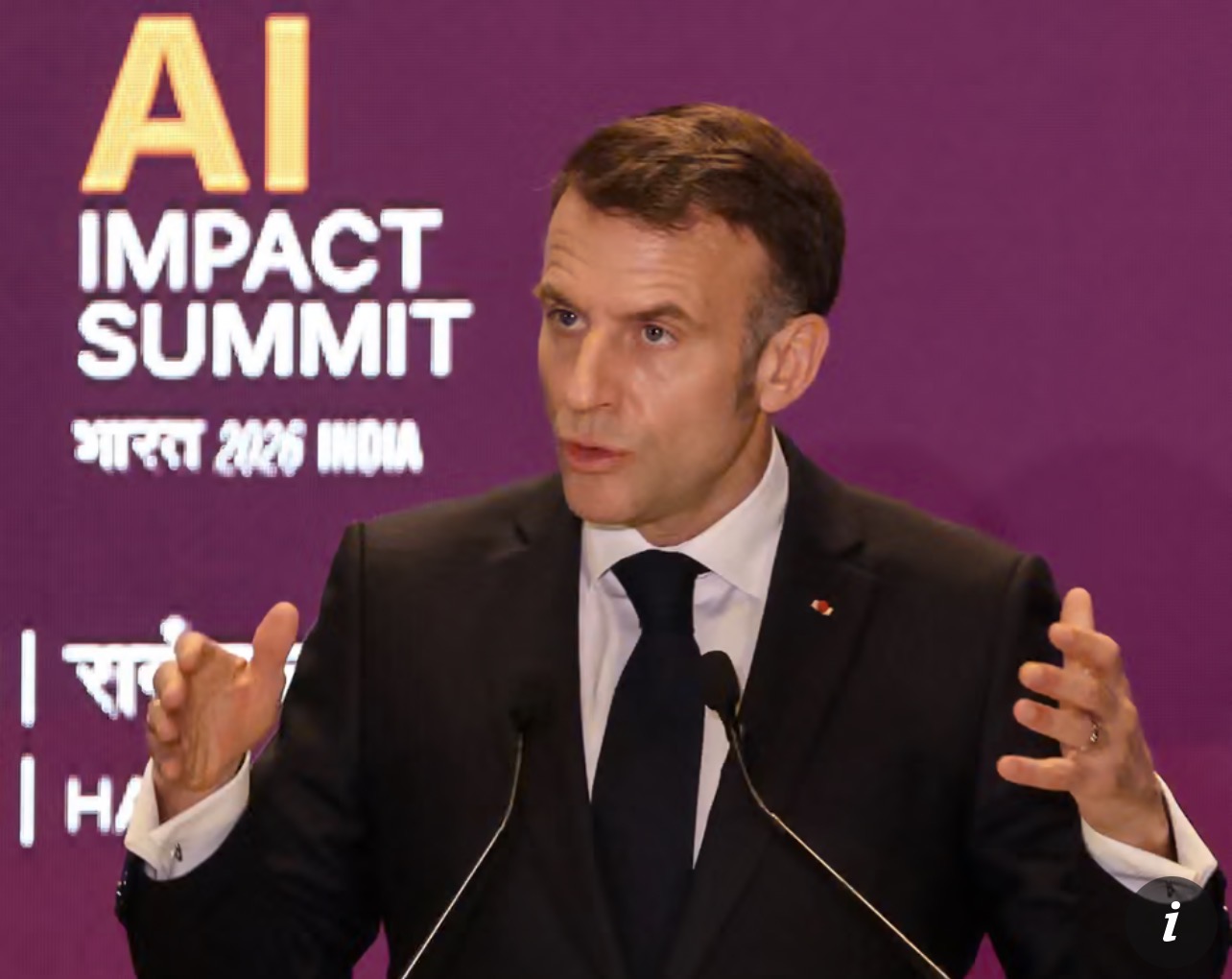
Osborne, who is two months into a job as head of the $500bn San Francisco AI company’s “for countries” programme, told leaders gathered for the AI Impact summit in Delhi: “Don’t be left behind.” He said that without AI rollouts they could end up with a workforce “less willing to stay put” because they might want to seek AI-enabled fortunes elsewhere. Osborne framed the choice facing countries as one between adopting AI systems produced either in the US – such as Open AI’s – or China. The two superpowers have so far developed the most powerful AI systems.The fourth intergovernmental AI summit, hosted by India’s prime minister, Narendra Modi, follows editions in the UK, Korea and France and is focusing on harnessing AI to the benefit of countries in the global south, for example by embracing more regional languages and applying AI to improving agriculture and public health.
It is also aiming to improve safety standards, which some experts fear are falling short of addressing the potential catastrophic risks being posed by the most advanced AIs amid White House opposition to red tape.
“A lot of countries who aren’t the United States of America and who aren’t the People’s Republic of China essentially face two kind of slightly contradictory feelings at the same time,” Osborne said. “The first is a Fomo: are we missing out on this huge technological revolution? How to be part of it? How do we make sure that our companies feel the benefits of it? How do we make sure our societies feel the benefits of it?”
At the same time, he said, these countries wanted to safeguard their national sovereignty while relying on powerful AIs controlled in the US and China. Osborne said: “There’s another kind of sovereignty, which is: don’t be left behind, because then you will be a weaker nation, a poorer nation, a nation whose workforce will be less willing to stay put.”
His comments came as the White House’s senior AI adviser, Sriram Krishnan, emphasised the Trump administration’s desire for AI supremacy, telling the summit: “We want to make sure the world uses our AI model.”
He also took a fresh swipe at the EU’s attempts to regulate AI, saying he would continue to “rant” against them.
“The EU AI Act is not really very conducive to an entrepreneur who wants to build innovative technology,” he said. But other technologists, and AI leaders in Africa, said the case for reliance on the two AI superpowers was not so clearcut.
“The idea that countries other than China and the US won’t be able to build big things – and we [hear] that a lot – is actually a false premise,” Mark Surman, the head of Mozilla, said. “It benefits the companies within those two countries.” “For us, it’s not a US or China thing,” said Kevin Degila, in charge of of AI and data at the Benin government’s digital agency. “We are Africans and our job is to collaborate [with each other] to build our own AI.”
He said 64 languages were spoken in his country of 15 million people and the government agency was building AIs for the public that fuse both American and Chinese AI technologies and their own large language datasets.
“Anthropic and OpenAI don’t reach the farmers,” he said.
Paula Ingabire, Rwanda’s minister of ICT and innovation, said her country was looking at partnerships with AI companies “that are going to be progressively less necessary”, with Rwanda not wishing to be “locked into very dependent partnerships”.
Also speaking at the summit was Rishi Sunak, the former UK prime minister, who now advises one of OpenAI’s main rivals, Anthropic, and Microsoft.
He urged political leaders to take bolder steps to lead the rollout of AI, saying: “If you are a prime minister you can only do a few things that you drive personally, and this has to be one of them.”
“One of my concerns is that I think some political leaders think that AI is going to be tomorrow’s issue, where I think they need to recognise that it’s an ‘action this day’ issue,” Sunak said. “AI needs to go to a centralised responsibility so we can realise the benefits.”
Subscribe to our weekly newsletter
Get the week's top stories from Asia delivered to your inbox — free, once a week.