
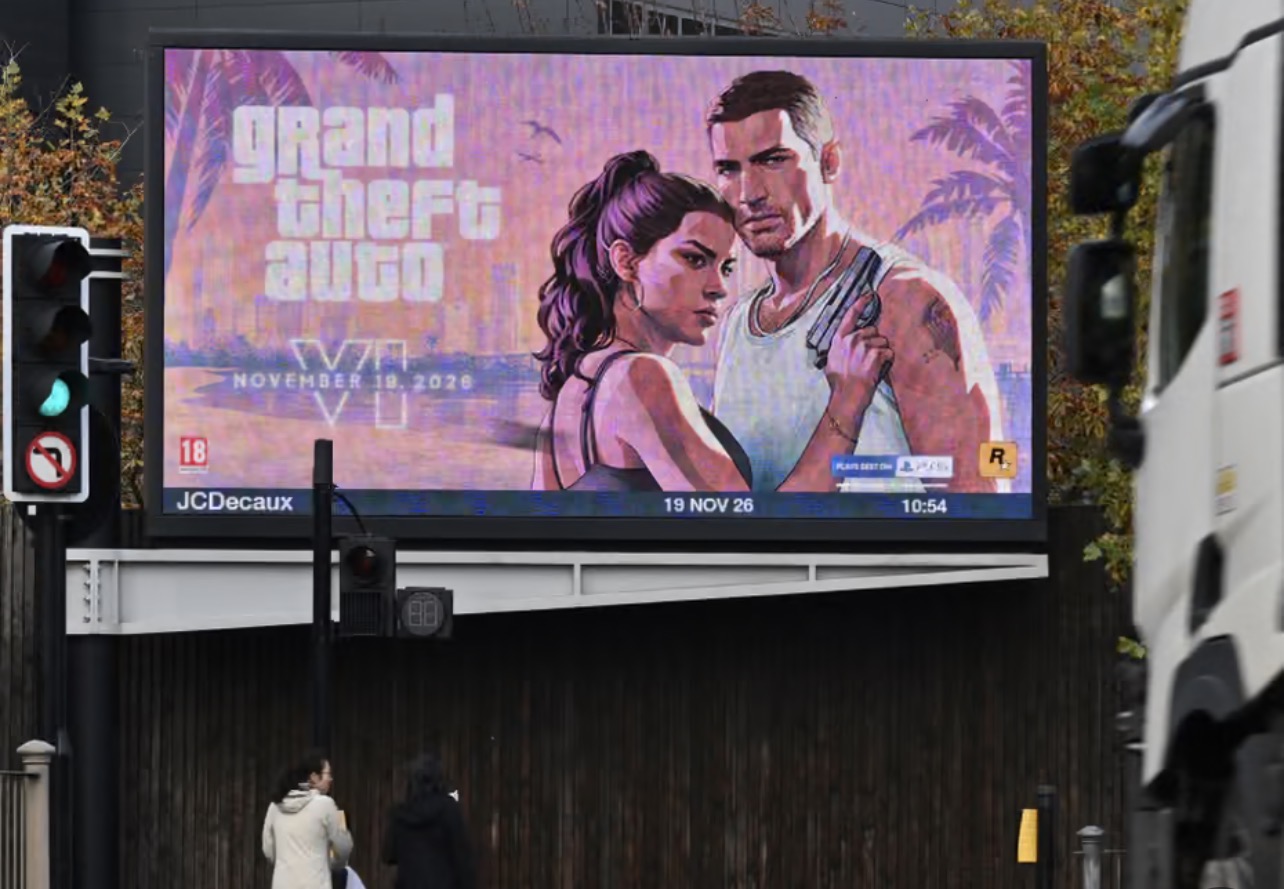
For nearly three decades, the Grand Theft Auto franchise has built its reputation on crime, violence and provocative portrayals of American society. Its latest instalment, Grand Theft Auto VI, introduces a more complicated dimension to that legacy. Beneath its fictional criminal world lies an exploration of inequality, hypocrisy, gender and the contradictions of the American dream.
Set in a fictionalised version of Florida, the game follows Jason and Lucia, two characters navigating a world where wealth, power and criminality frequently overlap. Its imagined Vice City presents a society in which the boundaries between legitimate authority and organised crime appear increasingly blurred.Yet the game’s significance extends beyond its expansive virtual environment. It reflects a broader cultural appetite for stories that challenge conventional ideas of success and morality. In this version of America, following the rules does not necessarily guarantee justice, while breaking them can appear to offer the only route to prosperity.
The franchise has also faced years of criticism over its treatment of women and its portrayal of violence. The introduction of Lucia as its first female protagonist represents an important development. Rather than remaining peripheral figures, women are given greater narrative agency, while the game’s central relationships introduce emotional vulnerability into a traditionally aggressive genre.
Perhaps the most interesting development is the changing relationship between players and the virtual world. Instead of relying entirely on violence, the game reportedly encourages greater attentiveness, interaction and alternative approaches to conflict. Its characters are not presented simply as heroes or villains, but as individuals shaped by circumstances and capable of both victimhood and wrongdoing.
This does not mean that Grand Theft Auto has abandoned its provocative identity. Rather, it appears to be expanding the questions it asks its audience. Can entertainment built around criminal behaviour also encourage moral reflection? Can satire expose the failures of a society while simultaneously entertaining millions?
The answer may lie in the experience itself. Grand Theft Auto VI does not necessarily ask players to become better people. It invites them to consider the consequences of their choices, even in a fictional world where the usual boundaries of responsibility seem suspended.
That shift could prove more significant than the scale of its virtual landscape.
Subscribe to our weekly newsletter
Get the week's top stories from Asia delivered to your inbox — free, once a week.