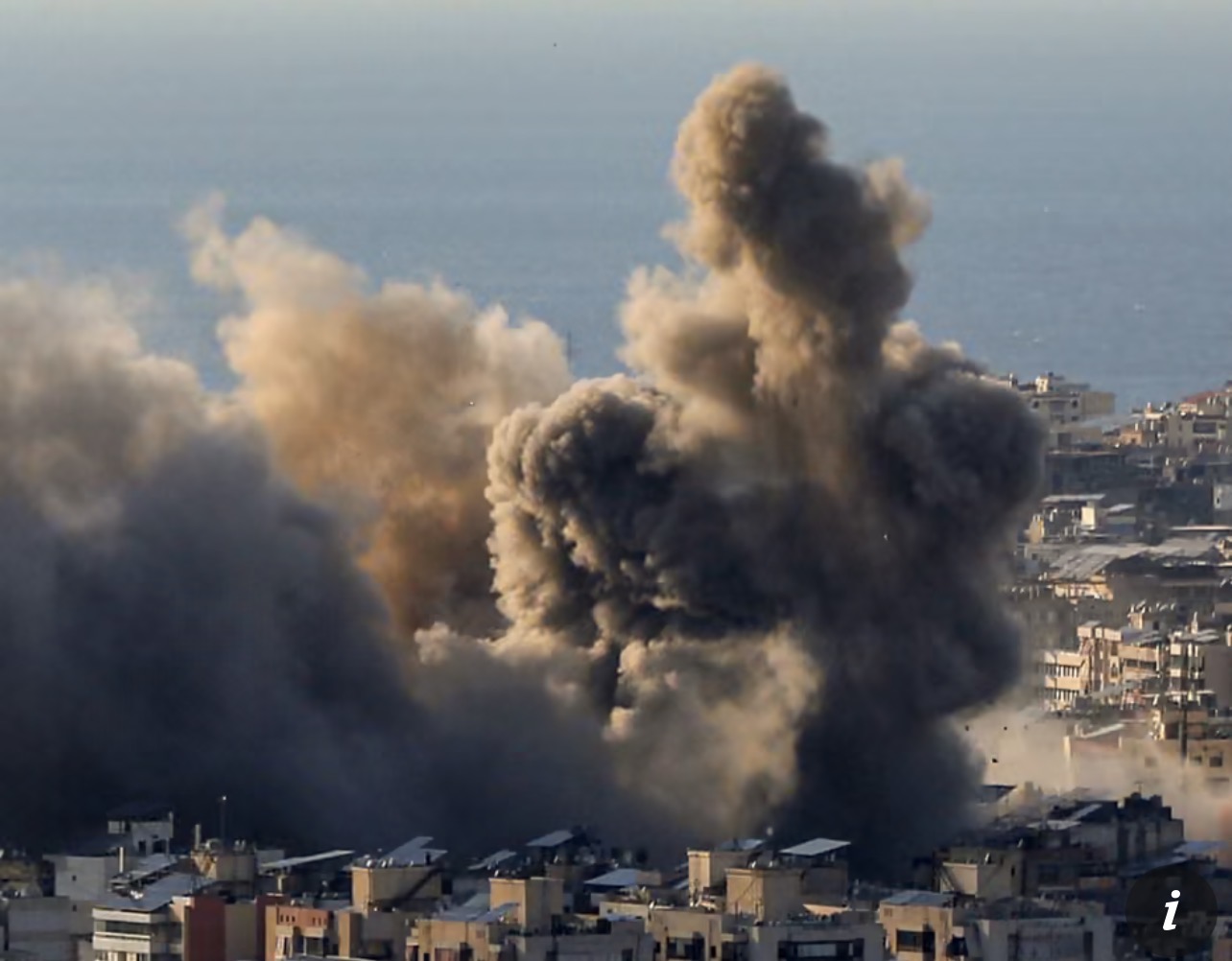
Middle East crisis live: Israel launches further attacks on Tehran and Beirut as Iran closes critical Strait of Hormuz
By Associated Press4 min read
The US-Israeli war on Iran has ignited fears that escalating military aggression in the Middle East could send oil prices soaring, push up prices at the pump and drive a global economic downturn.
The US began “major combat operations” in Iran on Saturday morning, shortly after Israel launched a strike against Tehran. Within hours of the US-Israeli strikes, Iran’s Revolutionary Guards reportedly warned tankers in the strait of Hormuz that no ship would be allowed to pass through the world’s most critical oil trade route.
Iran has not formally confirmed a block on the narrow waterway, which would be an unprecedented escalation in the region, but ships appear to be avoiding the strait after an attack on a ship off Oman. At least 150 tankers carrying crude, liquified natural gas and oil products had dropped anchor in open waters across the Gulf past the strait on Sunday, Reuters reported.
If the halt continues, it could block up to 15m barrels a day of crude oil from reaching their destinations.
In a worst-case scenario, experts have said oil market prices could surge from about $67 a barrel on Friday night to $100. This would spell trouble for many developed economies, including the US, that have struggled to shrug off the impact of inflation on growth and productivity. That has left households facing a cost of living crisis.
Bjarne Schieldrop, the chief commodities analyst at the financial services group SEB, said: “It has become quite clear now that this is the biggest bluff in history and it has gone horribly wrong. Now it is difficult for Trump to back down and pull out all his gunboats and fighter jets without losing face.”
The US-Israeli war on Iran has ignited fears that escalating military aggression in the Middle East could send oil prices soaring, push up prices at the pump and drive a global economic downturn.
The US began “major combat operations” in Iran on Saturday morning, shortly after Israel launched a strike against Tehran. Within hours of the US-Israeli strikes, Iran’s Revolutionary Guards reportedly warned tankers in the strait of Hormuz that no ship would be allowed to pass through the world’s most critical oil trade route.
Iran has not formally confirmed a block on the narrow waterway, which would be an unprecedented escalation in the region, but ships appear to be avoiding the strait after an attack on a ship off Oman. At least 150 tankers carrying crude, liquified natural gas and oil products had dropped anchor in open waters across the Gulf past the strait on Sunday, Reuters reported.
If the halt continues, it could block up to 15m barrels a day of crude oil from reaching their destinations.
In a worst-case scenario, experts have said oil market prices could surge from about $67 a barrel on Friday night to $100. This would spell trouble for many developed economies, including the US, that have struggled to shrug off the impact of inflation on growth and productivity. That has left households facing a cost of living crisis.
Bjarne Schieldrop, the chief commodities analyst at the financial services group SEB, said: “It has become quite clear now that this is the biggest bluff in history and it has gone horribly wrong. Now it is difficult for Trump to back down and pull out all his gunboats and fighter jets without losing face.”
How much oil does Iran have?
Iran is home to the world’s fourth largest proven oil reserves, holding up to 170bn barrels of oil, or about 9% of all global crude. It is behind only Venezuela, Saudi Arabia and Canada as the largest country by domestic oil reserves.
It is the fourth largest oil producer in Opec and one of the largest crude exporters in the world. It also has the world’s second largest proven gas reserves, with about one-sixth of global gas.
Decades of political unrest, war and sanctions throttled its crude production from a peak in 1974 of about 6m barrels of oil a day to about 3.5m barrels. In recent months its output has reached historic highs, despite US sanctions and Israeli bombardments, due to close ties with China. Beijing imports about 90% of Iran’s crude, which is subject to international sanctions.
Although Iran’s crude exports make up about 3-4% of the global market, its significance for the global oil markets extends well beyond its own production, according to experts.
Jorge León, the head of geopolitical analysis at Rystad Energy, said: “The country’s geopolitical weight is rooted in its strategic location, its influence over regional security dynamics and its capacity to disrupt critical energy infrastructure and transit routes.”
Why is the strait of Hormuz so important?
The strait of Hormuz is one of the most important arteries for global trade. About 20% of all oil supplies and about 20% of seaborne gas tankers pass through it.
The strait lies between Oman and Iran. It links the Gulf to the north with the Gulf of Oman to the south and the Arabian Sea beyond. It is 20 miles (33km) wide at its narrowest point, with the shipping lanes just 2 miles (3km) wide in either direction.
This location makes it a crucial choke point for oil deliveries from Opec countries to customers in Asia. Options to bypass the strait are limited.
The US began “major combat operations” in Iran on Saturday morning, shortly after Israel launched a strike against Tehran. Within hours of the US-Israeli strikes, Iran’s Revolutionary Guards reportedly warned tankers in the strait of Hormuz that no ship would be allowed to pass through the world’s most critical oil trade route.
Iran has not formally confirmed a block on the narrow waterway, which would be an unprecedented escalation in the region, but ships appear to be avoiding the strait after an attack on a ship off Oman. At least 150 tankers carrying crude, liquified natural gas and oil products had dropped anchor in open waters across the Gulf past the strait on Sunday, Reuters reported.
If the halt continues, it could block up to 15m barrels a day of crude oil from reaching their destinations.
In a worst-case scenario, experts have said oil market prices could surge from about $67 a barrel on Friday night to $100. This would spell trouble for many developed economies, including the US, that have struggled to shrug off the impact of inflation on growth and productivity. That has left households facing a cost of living crisis.
Bjarne Schieldrop, the chief commodities analyst at the financial services group SEB, said: “It has become quite clear now that this is the biggest bluff in history and it has gone horribly wrong. Now it is difficult for Trump to back down and pull out all his gunboats and fighter jets without losing face.”
The US-Israeli war on Iran has ignited fears that escalating military aggression in the Middle East could send oil prices soaring, push up prices at the pump and drive a global economic downturn.
The US began “major combat operations” in Iran on Saturday morning, shortly after Israel launched a strike against Tehran. Within hours of the US-Israeli strikes, Iran’s Revolutionary Guards reportedly warned tankers in the strait of Hormuz that no ship would be allowed to pass through the world’s most critical oil trade route.
Iran has not formally confirmed a block on the narrow waterway, which would be an unprecedented escalation in the region, but ships appear to be avoiding the strait after an attack on a ship off Oman. At least 150 tankers carrying crude, liquified natural gas and oil products had dropped anchor in open waters across the Gulf past the strait on Sunday, Reuters reported.
If the halt continues, it could block up to 15m barrels a day of crude oil from reaching their destinations.
In a worst-case scenario, experts have said oil market prices could surge from about $67 a barrel on Friday night to $100. This would spell trouble for many developed economies, including the US, that have struggled to shrug off the impact of inflation on growth and productivity. That has left households facing a cost of living crisis.
Bjarne Schieldrop, the chief commodities analyst at the financial services group SEB, said: “It has become quite clear now that this is the biggest bluff in history and it has gone horribly wrong. Now it is difficult for Trump to back down and pull out all his gunboats and fighter jets without losing face.”
How much oil does Iran have?
Iran is home to the world’s fourth largest proven oil reserves, holding up to 170bn barrels of oil, or about 9% of all global crude. It is behind only Venezuela, Saudi Arabia and Canada as the largest country by domestic oil reserves.
It is the fourth largest oil producer in Opec and one of the largest crude exporters in the world. It also has the world’s second largest proven gas reserves, with about one-sixth of global gas.
Decades of political unrest, war and sanctions throttled its crude production from a peak in 1974 of about 6m barrels of oil a day to about 3.5m barrels. In recent months its output has reached historic highs, despite US sanctions and Israeli bombardments, due to close ties with China. Beijing imports about 90% of Iran’s crude, which is subject to international sanctions.
Although Iran’s crude exports make up about 3-4% of the global market, its significance for the global oil markets extends well beyond its own production, according to experts.
Jorge León, the head of geopolitical analysis at Rystad Energy, said: “The country’s geopolitical weight is rooted in its strategic location, its influence over regional security dynamics and its capacity to disrupt critical energy infrastructure and transit routes.”
Why is the strait of Hormuz so important?
The strait of Hormuz is one of the most important arteries for global trade. About 20% of all oil supplies and about 20% of seaborne gas tankers pass through it.
The strait lies between Oman and Iran. It links the Gulf to the north with the Gulf of Oman to the south and the Arabian Sea beyond. It is 20 miles (33km) wide at its narrowest point, with the shipping lanes just 2 miles (3km) wide in either direction.
This location makes it a crucial choke point for oil deliveries from Opec countries to customers in Asia. Options to bypass the strait are limited.