
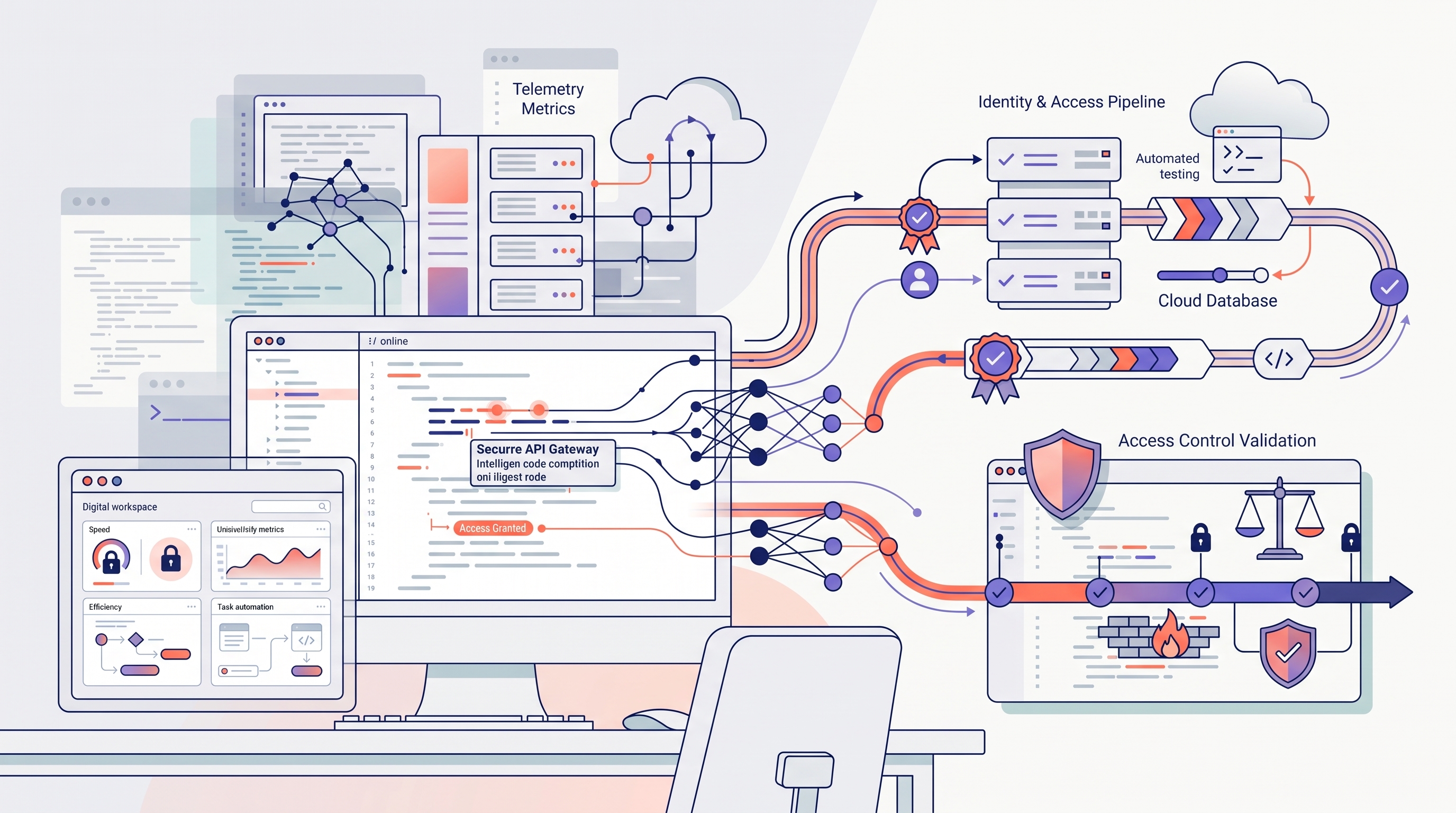
Modern mobile security requires coordinated protection across devices, APIs, identity systems, and backend infrastructure.
Pakistan
Mobile Security and Modern Application Architectures
Designing Secure, Resilient, and Scalable Mobile Applications Through Defense in Depth, Zero Trust Principles, and Modern Software Architecture
By Zohaib khan— Technology Correspondent7 min read
Mobile applications have become essential to digital services, financial transactions, communication, and data-driven business operations. As mobile ecosystems evolve, securing applications requires more than protecting the user interface or encrypting network traffic. It demands a comprehensive architectural approach that addresses data storage, authentication, authorization, API communication, third-party dependencies, and backend infrastructure. This article examines the relationship between mobile security and modern application architectures, focusing on defense in depth, secure client-server communication, identity management, data protection, and security testing. It discusses common vulnerabilities, including insecure local storage, hardcoded credentials, broken access controls, improper session management, and excessive trust in the mobile client. It also explores how modular architectures, centralized authorization, secure development practices, and continuous monitoring can strengthen application resilience. Drawing on established guidance from OWASP, Android Developers, Apple, and the Internet Engineering Task Force, the article presents practical strategies for incorporating security throughout the software development lifecycle. It argues that effective mobile security is a shared architectural responsibility that must be maintained throughout development, deployment, and ongoing operation. By integrating security requirements into system design and verification, development teams can build mobile applications that better protect user information while remaining reliable, maintainable, and scalable.
Introduction

Mobile applications have become a primary interface between users and digital services. From banking and healthcare to e-commerce, communication, and enterprise operations, mobile software routinely processes sensitive information and performs actions with significant consequences. As these applications become more connected to cloud services, external APIs, and distributed systems, their security requirements extend far beyond the device itself.
Modern application architectures introduce flexibility through reusable components, API-driven communication, cloud infrastructure, and modular services. However, these capabilities also create additional security considerations. A mobile application may depend on identity providers, third-party SDKs, remote databases, notification services, and multiple backend endpoints. A weakness in any critical component can expose data or undermine the security of the overall system.
Modern application architectures introduce flexibility through reusable components, API-driven communication, cloud infrastructure, and modular services. However, these capabilities also create additional security considerations. A mobile application may depend on identity providers, third-party SDKs, remote databases, notification services, and multiple backend endpoints. A weakness in any critical component can expose data or undermine the security of the overall system.
Understanding Mobile Security in Modern Architectures
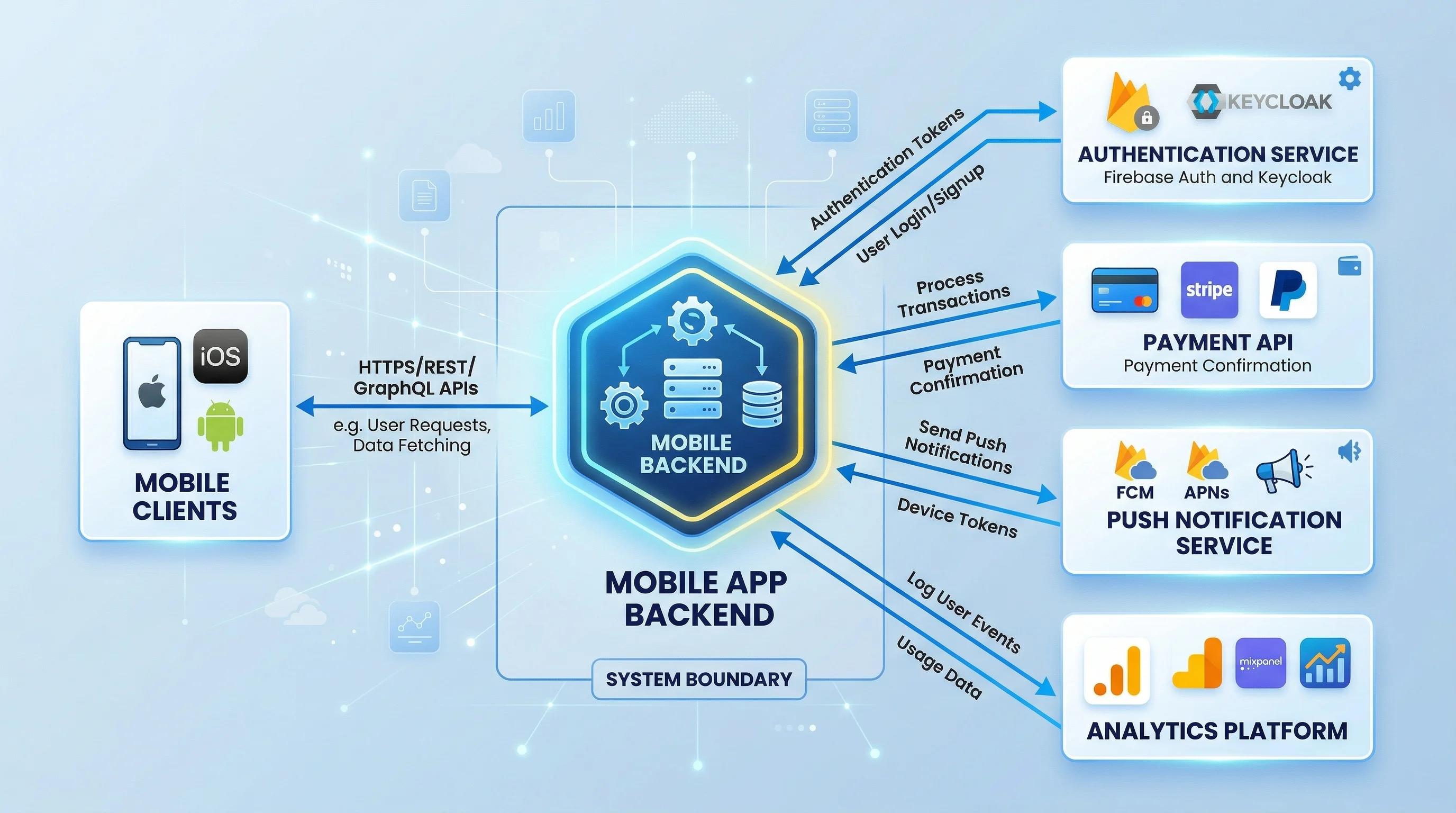
Mobile security refers to the practices and technical controls used to protect mobile applications, their data, their communication channels, and the services they access.
Unlike traditional desktop environments, mobile applications operate on devices that users control. Devices may be lost, shared, rooted, jailbroken, or exposed to malicious applications. Attackers may inspect application packages, observe network behavior, manipulate client-side state, or attempt to exploit weaknesses in backend APIs.
Modern mobile architectures commonly separate the application into several interacting layers:
Mobile client: The user interface, local state, device integrations, and client-side business logic.
Identity and access management: Authentication, session management, and identity verification.
API layer: The endpoints through which the application communicates with backend services.
Application services: Business rules, authorization decisions, and domain-specific operations.
Data layer: Databases, object storage, caches, and other persistence systems.
External dependencies: Payment providers, analytics services, notification systems, and third-party SDKs.
Each layer has different responsibilities and potential vulnerabilities. A secure design defines trust boundaries between them and determines which components are permitted to access specific information or perform particular operations.
For example, a mobile application may display an invoice and allow the user to request a payment. The client can provide the interface and initiate the request, but the backend must independently verify the user's identity, access rights, invoice ownership, and payment state before performing the transaction.
The mobile client should therefore be treated as an environment that can be inspected and manipulated, not as the ultimate authority for security decisions.
Common Security Risks in Mobile Applications
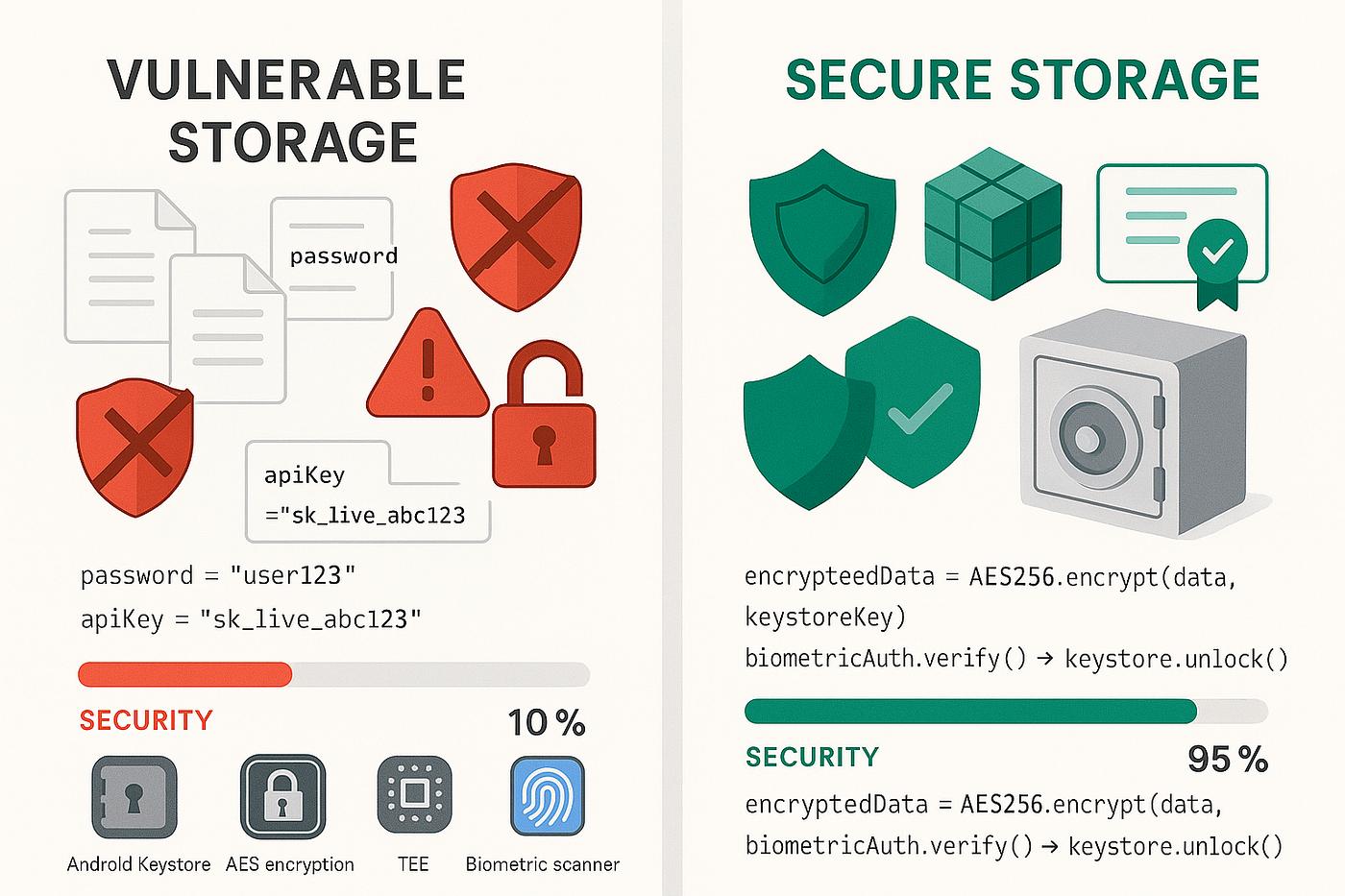
Mobile applications often store authentication tokens, personal information, cached API responses, and user preferences on the device. If sensitive information is stored inappropriately, it may be exposed through device compromise, backups, logs, debugging artifacts, or unintended data sharing.
Developers should minimize the amount of sensitive information retained locally and use platform-supported secure storage mechanisms when persistence is necessary.
A mobile application package can be inspected. Consequently, embedding private API keys, database passwords, signing credentials, or privileged service tokens in client code creates a significant risk.
Obfuscation may make inspection more difficult, but it cannot reliably transform a secret distributed to users into a server-only secret.
Authentication establishes who a user is. Authorization determines what that user is permitted to do. These are separate security responsibilities.
An application may authenticate users correctly but still expose private information if its backend accepts requests without verifying resource ownership or permissions.
Mobile applications exchange information with backend services, authentication providers, and third-party systems. If communication is not appropriately protected, sensitive data may be exposed or modified in transit.
Applications should use HTTPS with properly validated TLS certificates and avoid configurations that disable certificate validation. Sensitive information should not be sent through insecure endpoints or placed unnecessarily in URLs, where it may appear in logs or other records.
Third-party SDKs and libraries can introduce security weaknesses, unexpected data collection, or compatibility problems. Excessive application permissions can also increase the consequences of a compromise and undermine user trust.
Security Principles for Modern Application Architecture
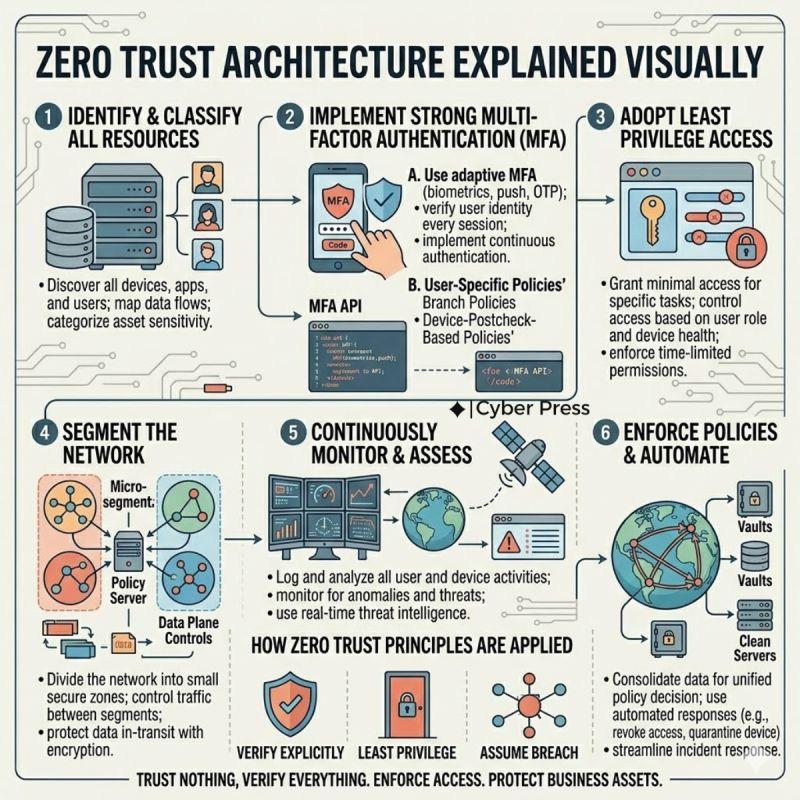
Defense in depth uses multiple complementary controls so that a failure in one area does not automatically compromise the entire system.
A mobile application might use secure local storage, encrypted network communication, short-lived access tokens, server-side authorization, database access policies, monitoring, and automated security tests.
Zero Trust is an approach in which access is not granted merely because a request originates from a previously trusted network, device, or application.
In mobile architectures, this means that backend services should authenticate requests, verify permissions, and enforce access policies at appropriate boundaries. A request from an authenticated mobile application should not automatically be trusted to access every resource.
The principle of least privilege requires each component to receive only the permissions needed to perform its responsibilities.
Mobile clients should not receive unrestricted database credentials or administrative service keys. Backend services should use narrowly scoped permissions, and users should only be able to perform operations appropriate to their roles.
Applications should default to restrictive access settings and collect only the information required for their intended functionality.
Permissions should be requested when necessary and explained clearly. Sensitive information should not be logged without a justified and protected process, and data retention policies should specify when information is deleted or anonymized.
APIs are a critical part of most modern mobile architectures because they connect client applications to business logic and stored information.
Applications using token-based authentication should protect access tokens, manage expiration, and provide a safe approach to session renewal and revocation.
OAuth 2.0 and OpenID Connect can support delegated authorization and user authentication when implemented with appropriate flows. For native applications, RFC 8252 recommends using an external user agent, typically the system browser, for OAuth authorization and describes relevant security practices.
All data received from a mobile client should be treated as untrusted. Backend services should validate data types, ranges, formats, and business rules before processing requests.
For example, a client should not be allowed to change a transaction amount simply by modifying a request payload. The backend must calculate or verify authoritative values and enforce the applicable business rules.
Publicly accessible APIs may be exposed to automated abuse, credential attacks, excessive requests, and resource exhaustion.
Subscribe to our weekly newsletter
Get the week's top stories from Asia delivered to your inbox — free, once a week.
Data Protection on Devices and in Transit

Sensitive local information should be stored only when necessary and protected using suitable platform capabilities. Cryptographic keys should be managed separately from encrypted data and should not be embedded as static secrets in the application package.
HTTPS protects data exchanged between the client and server when TLS is correctly configured and certificate validation is maintained.
Logs are valuable for debugging and incident investigation, but they can also expose credentials, personal information, and confidential business data.
HTTPS protects data exchanged between the client and server when TLS is correctly configured and certificate validation is maintained.
Logs are valuable for debugging and incident investigation, but they can also expose credentials, personal information, and confidential business data.
Security Considerations for Cross-Platform Applications
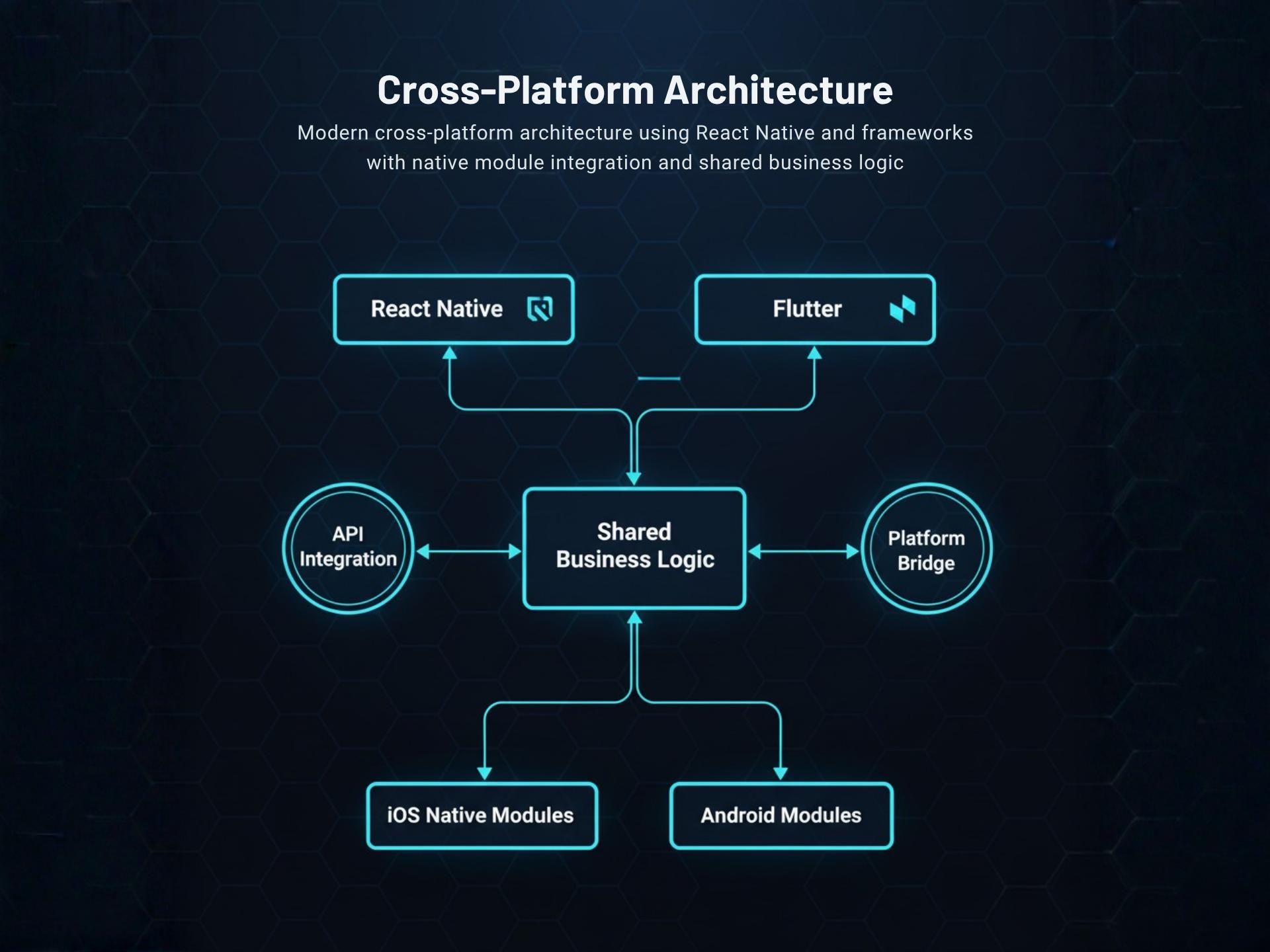
Frameworks such as Flutter and React Native allow developers to share substantial portions of application code across Android and iOS. This can improve maintainability, but shared code does not remove platform-specific security responsibilities.
Developers must still account for differences in secure storage, application lifecycle behavior, permissions, biometric authentication, deep links, file handling, and native integrations.
For example, a cross-platform application may use a common authentication service while relying on Android Keystore and Apple Keychain through appropriate platform integrations. The architecture should hide unnecessary platform differences behind well-defined interfaces without weakening the security guarantees of either platform.
Security Testing Throughout the Development Lifecycle
Security should be addressed during requirements analysis, architecture design, implementation, testing, deployment, and maintenance.
Threat modeling helps teams identify valuable assets, trust boundaries, potential attackers, and likely attack paths before implementation.
For a messaging application, relevant assets might include private messages, authentication tokens, account information, and encryption keys. Threats may include unauthorized account access, token theft, insecure local storage, and broken authorization between users.
Identifying these threats early allows developers to establish appropriate controls and acceptance criteria.
Static analysis, dependency scanning, secret detection, and automated tests can identify many common weaknesses. Dynamic testing can help uncover problems that appear only when the application is running.
Security responsibilities continue after release. Dependencies may develop new vulnerabilities, backend configurations may change, and attackers may discover new weaknesses.
Conclusion
Mobile security is a fundamental architectural requirement for applications that process personal information, support business operations, or communicate with remote services. As mobile systems become increasingly connected and distributed, security must extend across the client, identity infrastructure, APIs, backend services, data storage, and third-party dependencies.
Modern architectural approaches can improve modularity, maintainability, and scalability, but they also require careful management of trust boundaries and access permissions. Encryption, authentication, secure storage, API protection, and security testing are most effective when implemented as complementary parts of a coherent design.
Modern architectural approaches can improve modularity, maintainability, and scalability, but they also require careful management of trust boundaries and access permissions. Encryption, authentication, secure storage, API protection, and security testing are most effective when implemented as complementary parts of a coherent design.