The United Arab Emirates’ bid for a leading role at the United Nations has drawn scrutiny over allegations concerning the conflict in Sudan
United Nations
UAE’s UN Leadership Bid Faces Scrutiny Over Alleged Links to Sudan Conflict
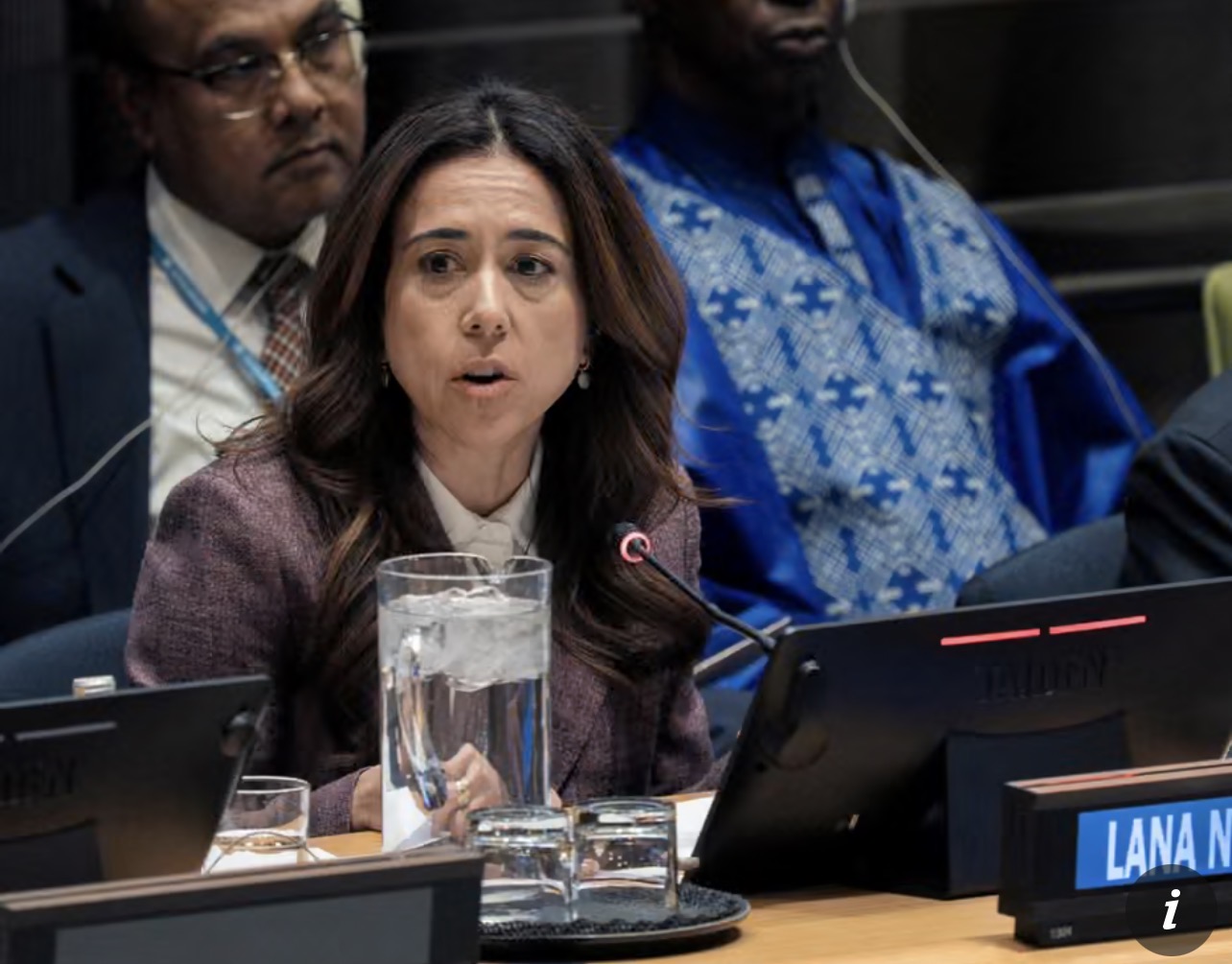
The nomination of Emirati diplomat Lana Nusseibeh for the United Nations’ top diplomatic position has sparked criticism from Sudanese activists and human rights organisations, raising questions about institutional independence and accountability.
By Alexander Reed4 min read
The United Arab Emirates’ nomination of senior diplomat Lana Nusseibeh for the position of United Nations secretary-general has triggered criticism from Sudanese diaspora groups, human rights advocates and civil society organisations, bringing renewed attention to allegations of external involvement in Sudan’s devastating conflict.
Nusseibeh’s candidacy comes at a critical moment for the United Nations, as António Guterres approaches the conclusion of his second five-year term. The nomination has introduced a new dimension to an already contested selection process, with critics questioning whether a representative of a country accused of supporting one of the armed factions in Sudan can provide the independence expected of the organisation’s highest official.
The controversy centres on allegations that the UAE has provided financial, logistical and military support to Sudan’s paramilitary Rapid Support Forces (RSF), which has been accused of widespread atrocities against civilians during its war with the Sudanese Armed Forces. The Emirati government has repeatedly rejected allegations of supporting the paramilitary group.
Human rights organisations and international observers have raised concerns about the reported role of external actors in prolonging the conflict. The situation became particularly grave during the RSF’s October 2025 offensive in El Fasher, where the United Nations identified characteristics of genocide in the atrocities committed against civilian populations.
Sudanese activists argue that Nusseibeh’s previous public defence of her country’s position raises questions about her ability to exercise independent judgement if appointed secretary-general. Hala al-Karib, a Sudanese pro-democracy and women’s rights activist, has questioned whether Nusseibeh could act independently of the UAE’s position on Sudan.
Other critics have expressed concern that her appointment could undermine confidence in the United Nations among communities seeking international protection and accountability. Ibrahim Alduma, co-founder of Sudan Action Hub, has argued that Sudanese civilians could find it difficult to trust an institution whose leadership is perceived as closely aligned with a government accused of involvement in their country’s conflict.
Human rights advocates have also questioned the candidate’s responses to allegations concerning Emirati support for the RSF. Kenneth Roth, former executive director of Human Rights Watch, criticised Nusseibeh’s dismissal of these allegations, arguing that the next secretary-general must demonstrate a commitment to evidence-based investigations and accountability.
Bruno Stagno Ugarte of Human Rights Watch has similarly argued that dismissing United Nations findings concerning alleged links between the UAE and the RSF risks undermining justice for victims of the conflict.
Nusseibeh, however, has defended her candidacy and outlined her position on the issue. In a statement, she described the RSF’s crimes as atrocious and pledged to support United Nations fact-finding missions, accountability mechanisms and transitional justice efforts concerning Sudan. She has also stated that she has taken leave from her ministerial position in the UAE government to respect the independence expected of the secretary-general.
Her response highlights the central question surrounding the nomination: whether diplomatic experience and assurances of institutional independence will be sufficient to address concerns about the foreign policy positions of the country she has represented.
The selection process itself is complex. A candidate for secretary-general must secure at least nine affirmative votes in the 15-member Security Council while avoiding a veto from any of its five permanent members: the United States, the United Kingdom, China, France and Russia. The process therefore involves diplomatic negotiations among major powers, making geopolitical considerations an unavoidable part of the appointment.
The reported uncertainty surrounding the leading candidates has further complicated the race. Former Costa Rican vice-president Rebeca Grynspan had emerged as a frontrunner in an earlier informal Security Council poll, although the competing candidates faced opposition from permanent members.
Beyond the immediate diplomatic contest, the controversy raises broader questions about the credibility and independence of multilateral institutions. The United Nations is expected to serve as a forum for international cooperation, conflict resolution, humanitarian protection and the promotion of international law. Its secretary-general must therefore command confidence not only among member states but also among populations affected by conflict and human rights violations.
Sudan’s war has already created one of the world’s most severe humanitarian emergencies, displacing millions of people and exposing civilians to widespread violence, hunger and insecurity. The international community faces mounting pressure to strengthen humanitarian assistance, support credible investigations and pursue diplomatic efforts towards a sustainable political settlement.
The role of external actors in the conflict remains an important subject of international scrutiny. Any allegations involving state support for armed groups must be assessed through credible evidence, independent investigations and established international mechanisms rather than political assertions alone.
Nevertheless, the concerns surrounding Nusseibeh’s nomination highlight the difficult relationship between national diplomatic representation and international institutional independence. A secretary-general must be capable of engaging powerful governments while retaining the credibility to question their actions when international law or humanitarian principles are at stake.
The question facing the United Nations is therefore larger than the appointment of an individual diplomat. It concerns the institution’s ability to maintain public confidence, uphold impartiality and ensure that the pursuit of international justice is not overshadowed by geopolitical interests.
Subscribe to our weekly newsletter
Get the week's top stories from Asia delivered to your inbox — free, once a week.