Pakistan’s Climate Change Minister Musadik Malik has called for an evidence-based approach to discussions on terrorism with India, saying meaningful dialogue must allow both countries to present their respective positions and supporting evidence.
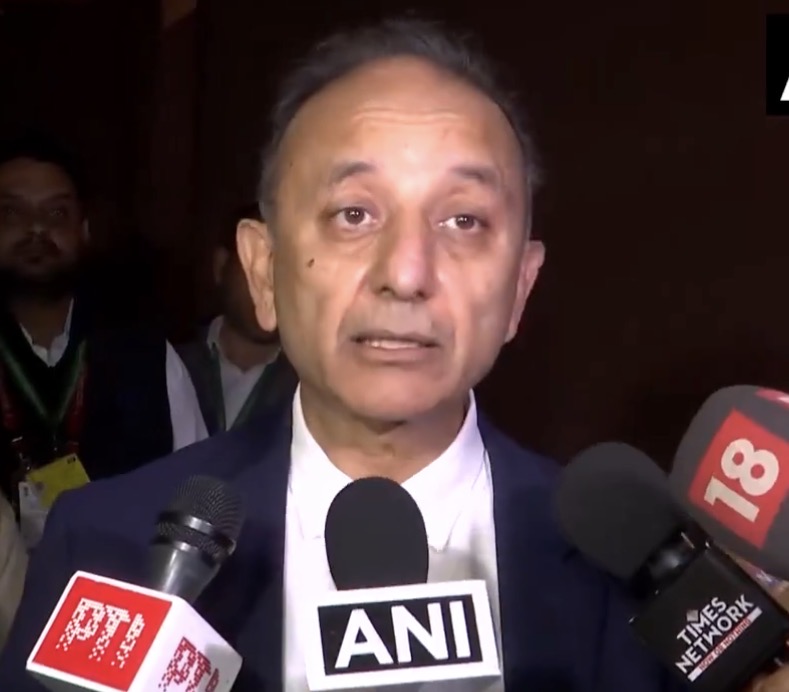
Speaking to Indian journalists on Sunday during a three-day visit to New Delhi, Malik said Pakistan remained open to discussions through bilateral and multilateral platforms, provided they were directed towards finding a lasting solution.“Whenever discussions take place, they will be based on evidence, and they will certainly happen,” Malik said in response to questions about the possibility of engagement between the two neighbours.
He added that Pakistan also had evidence it wished to present, stressing that both sides should have the opportunity to put forward their respective concerns.
Malik is visiting India to attend the Shanghai Cooperation Organisation’s (SCO) Civilisational Dialogue Forum. His visit marks the first by a Pakistani federal minister to India since former foreign minister Bilawal Bhutto-Zardari attended an SCO meeting there in May 2023.
Responding to questions about the possibility of bilateral talks, Malik distinguished between his participation in the multilateral gathering and a separate diplomatic engagement with New Delhi.
He said India had invited him to attend a specific forum and that he had come to represent Pakistan at that event. If New Delhi wished to discuss bilateral disputes, he added, it should formally invite Pakistan for that purpose.
Asked about the Indus Waters Treaty (IWT), Malik declined to elaborate, indicating that he would address the issue when invited for discussions on the subject.
India placed the treaty in abeyance in April 2025 following the attack in Pahalgam, Indian-administered Kashmir, which New Delhi attributed to Pakistan. Islamabad rejected the allegation and called for an impartial investigation.
Pakistan subsequently maintained that the agreement did not permit unilateral suspension and warned that any attempt to obstruct its share of water would have serious consequences.
The Permanent Court of Arbitration ruled on August 31, 2025, that the treaty remained in force and that India could not unilaterally terminate or suspend its obligations under the agreement.
Brokered by the World Bank in 1960, the treaty allocates the Indus, Jhelum and Chenab rivers primarily to Pakistan, while Ravi, Beas and Sutlej are allocated to India. It has remained a central framework for water-sharing between the two countries despite decades of political and military tensions.
Beyond the political disputes, Malik used his participation in the SCO forum to draw attention to the environmental challenges confronting South Asia.
Addressing the gathering on Saturday, he described climate change as an enemy of civilisations and highlighted the shared risks posed by rising temperatures, melting glaciers and glacial lake outburst floods (GLOFs).
He stressed that environmental disasters do not recognise political boundaries, making regional cooperation increasingly important for countries exposed to climate-related risks.
Pakistan and India have experienced repeated diplomatic and military confrontations, with relations deteriorating further after the four-day armed conflict in May 2025.
Malik’s visit provides a limited opening for diplomatic engagement at a time when disputes over security, water and regional stability continue to define relations between the nuclear-armed neighbours.
Subscribe to our weekly newsletter
Get the week's top stories from Asia delivered to your inbox — free, once a week.