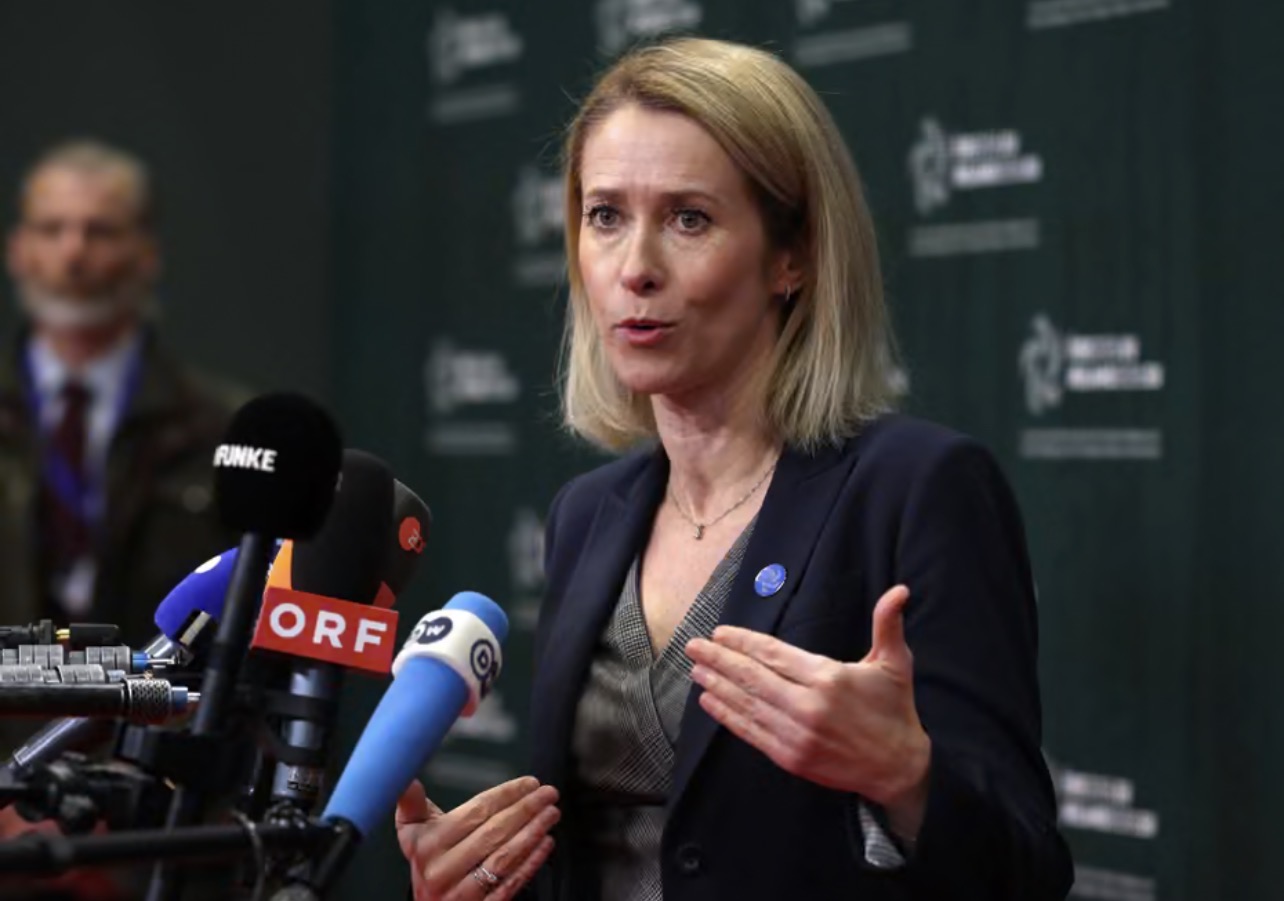
European Union foreign policy chief Kaja Kallas has accused Moscow of attempting to shift the focus of Ukraine peace negotiations towards broader European security arrangements, warning world leaders against accepting what she described as Russia’s negotiating traps.
Speaking ahead of an EU leaders’ summit in Dublin, Kallas argued that Russia was using discussions about European security to divert international attention from its military aggression against Ukraine.“We have one aggressor and one victim, and the aggressor does not have security concerns,” Kallas said, insisting that European leaders should remain focused on Russia’s actions in Ukraine.
The warning comes as Moscow has renewed demands for a fundamental restructuring of Europe’s security architecture, proposals that were rejected by Western governments in 2021 over concerns that they would undermine the sovereignty of Central and Eastern European states.
The latest round of negotiations involving Ukraine, Russia and the United States took place in Abu Dhabi this week. US envoy Jared Kushner indicated on Thursday that Moscow and Kyiv had agreed to expand the next round of discussions to include European representatives. However, the Kremlin subsequently offered a more cautious response, saying that Russia would first assess Europe’s intentions and willingness to contribute to the peace process.
European leaders have maintained that the continent must have a meaningful role in determining the terms of any settlement. They have also stressed the importance of establishing a ceasefire before moving towards comprehensive peace negotiations.
German Chancellor Friedrich Merz rejected the need to renegotiate Europe’s existing security framework, arguing that established agreements already provide the basis for continental security. He also maintained that Germany should be represented in any European delegation.
European Commission President Ursula von der Leyen similarly stressed that European participation was essential to protect the bloc’s interests and support Ukraine.
Meanwhile, differences have emerged among European capitals over who should represent the continent at the negotiating table. France and Germany favour maintaining the involvement of their national envoys through the E3 framework, comprising Britain, France and Germany, alongside EU representatives.
Other member states have called for a stronger institutional role for European Council President António Costa and Kaja Kallas.
Swedish Prime Minister Ulf Kristersson suggested that the debate over representation should not overshadow the substance of the negotiations. He expressed support for different diplomatic arrangements, including the E3 and E5 formats, the latter also involving Italy and Poland.
Several European leaders have also emphasised Britain’s importance in the negotiations, particularly given its involvement in the coalition of countries committed to supporting Ukraine’s future security.
Irish Taoiseach Micheál Martin said Britain and Norway had significant roles to play, describing the conflict as a matter affecting the entire European continent.
British Prime Minister Andy Burnham said the European Union should determine its own representation while emphasising that broader European security arrangements should be decided by European countries themselves.
The disagreement over representation highlights a wider diplomatic challenge facing Europe as negotiations continue. While Washington has signalled support for greater European involvement, Moscow has yet to commit clearly to an expanded negotiating format.
With questions surrounding Ukraine’s territorial future, security guarantees and potential European Union membership still unresolved, the shape of Europe’s participation could become a significant issue in the next phase of peace diplomacy.
Subscribe to our weekly newsletter
Get the week's top stories from Asia delivered to your inbox — free, once a week.